What is Selvedge Denim?
Selvedge denim is woven on shuttle looms so the fabric has a finished self-edge. That edge is used in the jean’s outseam. This article explains how it is made, how to identify it, and what happened when we built the same jean without it.

Quick summary
Selvedge denim is woven on a shuttle loom, producing a self-finished edge used in the jean’s outseam. Modern looms weave wider rolls; shuttle looms weave narrow rolls, about 32 inches across, and run slower, which is why selvedge costs more to produce. Selvedge denim is often preferred for its durability, the way it fades and develops character with wear, and the visible selvedge ID line that shows when jeans are cuffed. Selvedge describes the weave; raw describes an unwashed finish, and they’re often paired but aren’t the same thing. The weave itself doesn’t guarantee higher quality, but mills that still run shuttle looms tend to take more care at every stage.
Fewer clothes. Fewer decisions.
Todd Shelton’s Original 13 has been made from Kuroki selvedge denim at our New Jersey factory since 2012 — the longest running product in the collection.
How do I know if my jeans are selvedge?
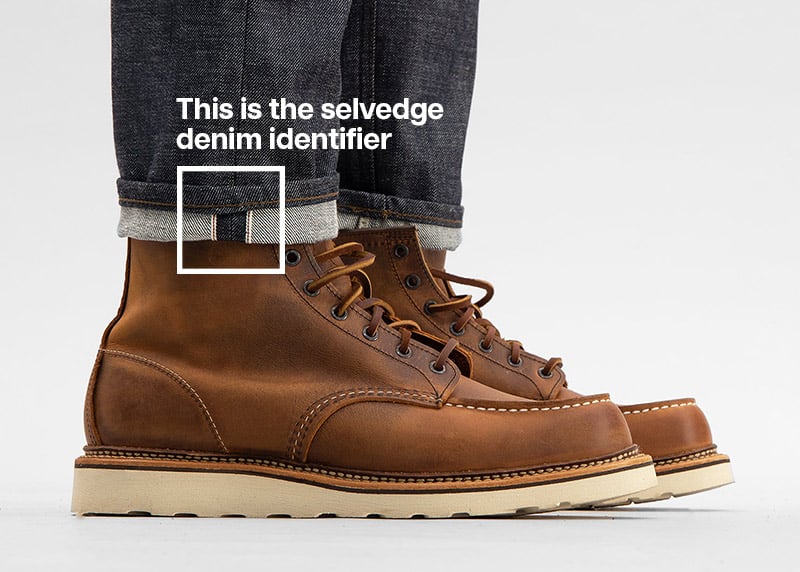
Turn up the cuff to look at the seams on the inside of the jean. Look at the seam that runs up the outside of the leg. If the edges look finished (the yarns of the self-edge are a different color than the fabric), it’s selvedge.
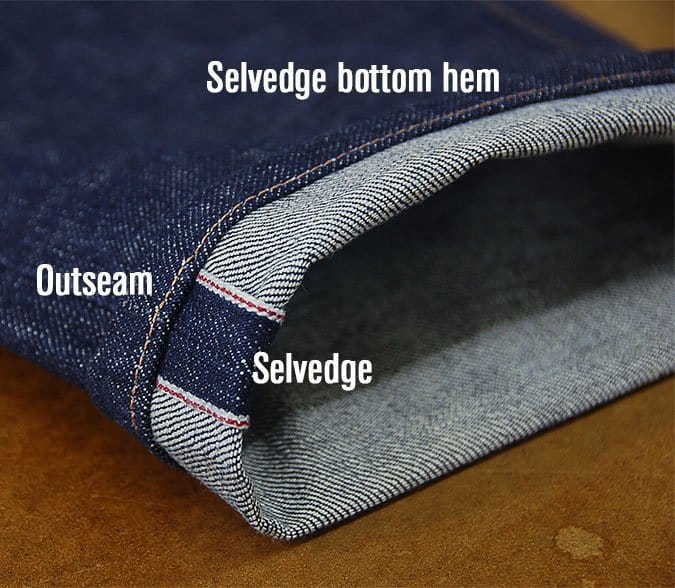
If the edges look like cut fabric and like a sewing machine covered the edges with thread to keep the denim from unraveling, then it’s not selvedge. See image below.
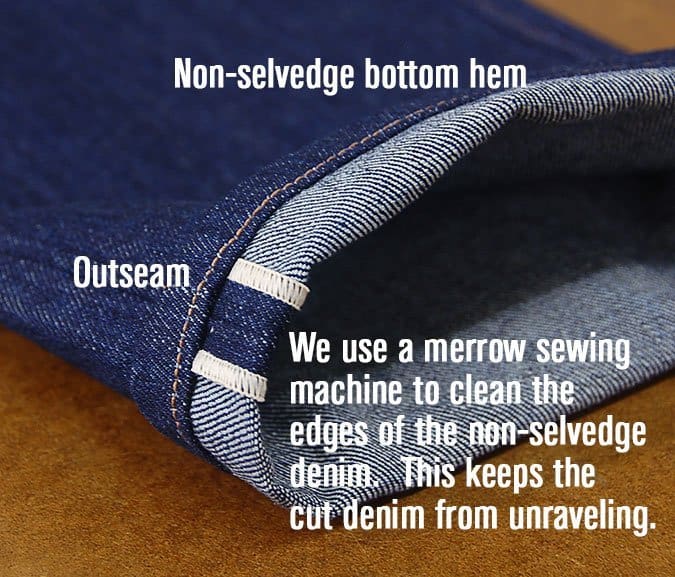
Selvedge vs. raw denim: what is the difference?
Selvedge relates to how denim is woven and raw relates to how denim is washed, or rather, not washed.
All denim, selvedge or non-selvedge, is raw in the beginning. Raw denim means unwashed denim, straight off the roll. After washing, the denim is not raw anymore. You can buy selvedge jeans that are raw or washed.
The reason they get confused is because many brands that use selvedge denim only sell raw denim jeans. Because the two options are so frequently paired together by heritage brands, it is easy to assume they mean the same thing.
Selvedge vs. selvage: which spelling is correct?
According to Wikipedia, the words selvage and selvedge are grammatically correct.
Selvedge is British English. Selvage is US English. We use selvedge because of the direct use of the root word “edge.”
What makes selvedge denim special?
Selvedge denim is an old-fashioned way of weaving denim, generally on older machines called shuttle looms. People who care about selvedge denim appreciate its historical authenticity, but they also value the unique character it gives the fabric.
Unlike modern, high-speed industrial looms that produce perfectly uniform denim, vintage shuttle looms run slowly and vibrate heavily. This slower, less precise mechanical process leaves slight variations and tiny imperfections in the weave. These subtle irregularities give the denim a rich, slightly textured surface that you can actually feel.
Is selvedge denim better quality?
Selvedge is a specific method of weaving denim, but the weave itself does not automatically guarantee a higher quality denim. For example, a denim mill could take the exact same cotton yarns, indigo dyes, and structural design, but run them across two different machines: a traditional self-edge loom and a modern conventional loom. In theory, the quality of those two finished fabrics would be identical.
Why is selvedge denim considered better?
Two things give selvedge denim its reputation for superiority: the care taken across every stage of production, and one distinct style advantage.
Weaving is one stage in making denim. The others are the cotton itself, spinning the yarn, dyeing it, and finishing the fabric. A mill that runs slow shuttle looms tends to apply the same care to the earlier stages: better cotton, closer attention in dyeing, tighter quality control through finishing.
Todd Shelton’s selvedge denim has come from Kuroki, a Japanese mill, since 2012.
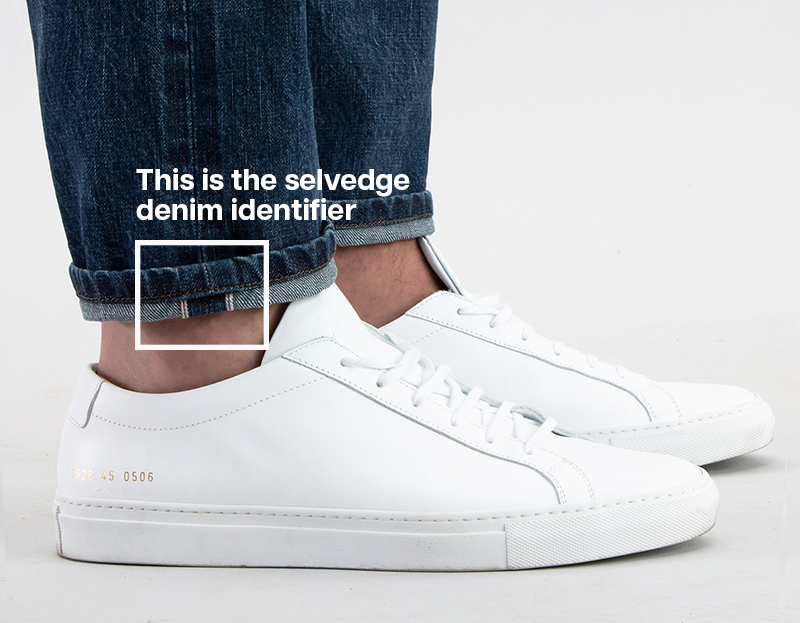
In terms of style, selvedge denim jeans have one distinct advantage. When you roll or cuff your jeans, the finished selvedge ID line becomes visible, creating a clean, elevated look.
Why is selvedge denim more expensive?
Selvedge denim is woven on vintage shuttle looms that operate at a fraction of the speed of modern machinery. While commercial textile mills use massive high-speed looms to churn out massive quantities of fabric quickly, traditional shuttle looms require significantly more time to produce a single yard of denim. Because production takes longer and yields far less fabric per hour, the cost to make authentic selvedge is naturally higher.
Which is better: selvedge or non-selvedge?
A few years ago, we decided to put this debate to the test. We developed a non-selvedge jean using the exact same raw cotton, the same weight, and the same premium mill as our best-selling selvedge jean, Original 13.
Our goal was to see if a less expensive version of our longest-running jean would perform the same, and be as enjoyable to wear. We called this new, non-selvedge version Harvester.
After two years, we discontinued Harvester. Even though the ingredients were identical on paper, the finished jeans simply did not fit or age as well as the original selvedge version. It was missing the magic of Original 13, and the difference came down entirely to the weaving.
Constructing a selvedge jean
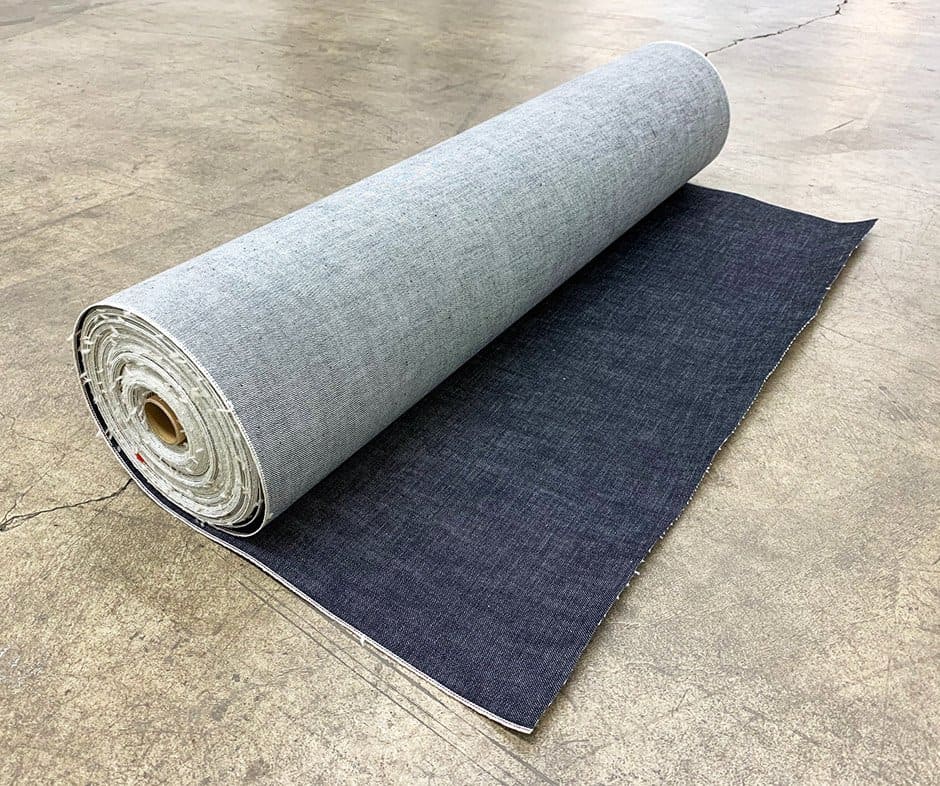
Vintage shuttle looms weave narrow rolls of fabric, typically measuring only 32 inches across. Modern mass-production looms weave rolls that are twice as wide.
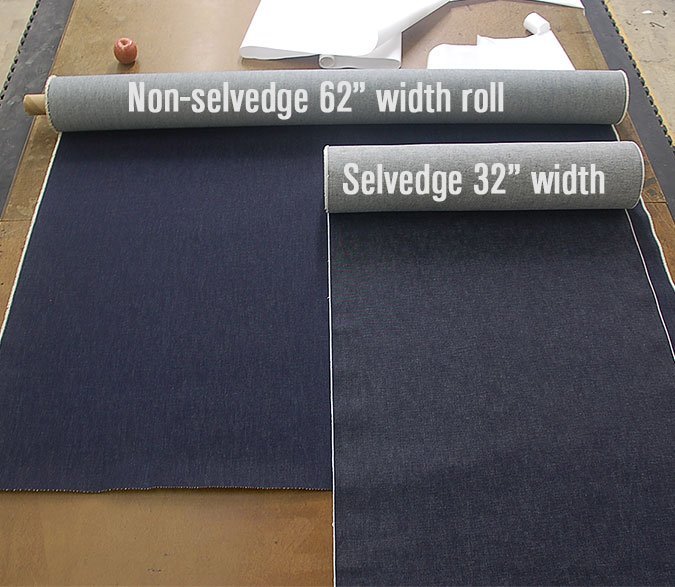
Because selvedge fabric is so narrow, the garment cutting process requires precision. In our factory in Paterson, New Jersey, a garment cutter places the pattern pieces directly along the finished outer edge of the fabric. The straight, uncut self-edge becomes the jean’s outseam. Because this woven edge cannot unravel or fray, it serves as a clean, finished inner seam without requiring any extra sewing machine stitching.
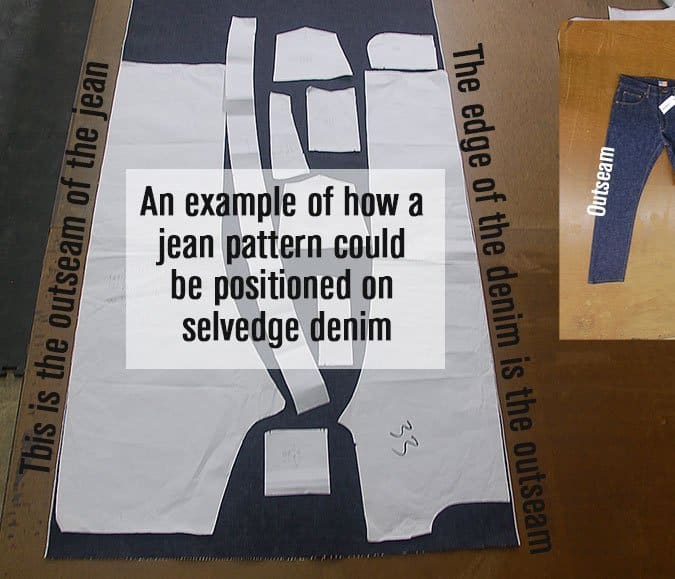
The jean pattern is placed onto denim before cutting, notice the self-edge used in the jean construction, specifically the outseams.
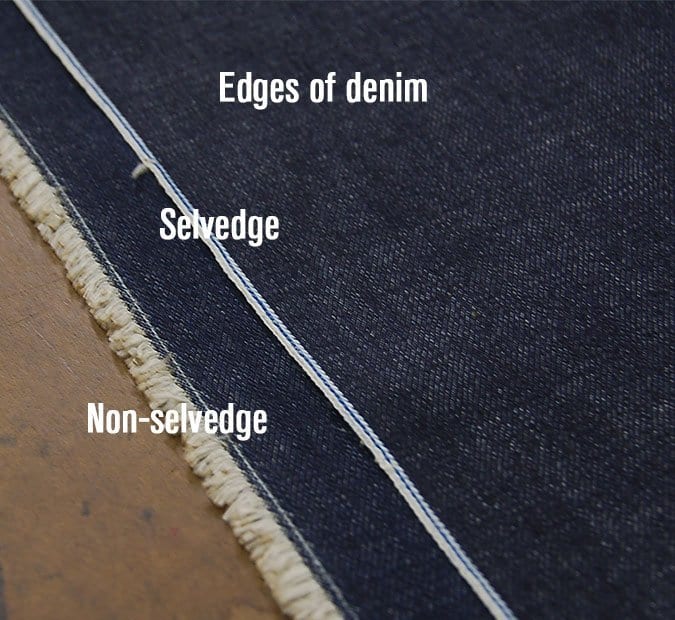
In the above photo, the selvedge has a finished white edge with a blue identifier. But the non-selvedge has an unfinished edge.
A brief history of selvedge denim jeans
Historically, all denim was selvedge denim. Traditional shuttle looms were the standard in textile manufacturing until the mid-twentieth century, producing the rugged, narrow-width fabrics.
As global demand for denim surged throughout the 1950s and 1960s, major commercial mills began modernizing their machinery to speed up production. They replaced slow shuttle looms with massive, high-speed looms. Because these modern machines were faster and produced wider rolls of fabric, vintage self-edge looms quickly became obsolete for mass production.
Today, this old-fashioned weaving technique has become highly desirable again. Its resurgence is driven by an appreciation for clothing heritage and a commitment to quality by the select artisan mills that still choose to operate these historic machines.